> For the complete documentation index, see [llms.txt](https://docs.portainer.io/llms.txt). Markdown versions of documentation pages are available by appending `.md` to page URLs; this page is available as [Markdown](https://docs.portainer.io/user/account-settings.md).
# Account settings
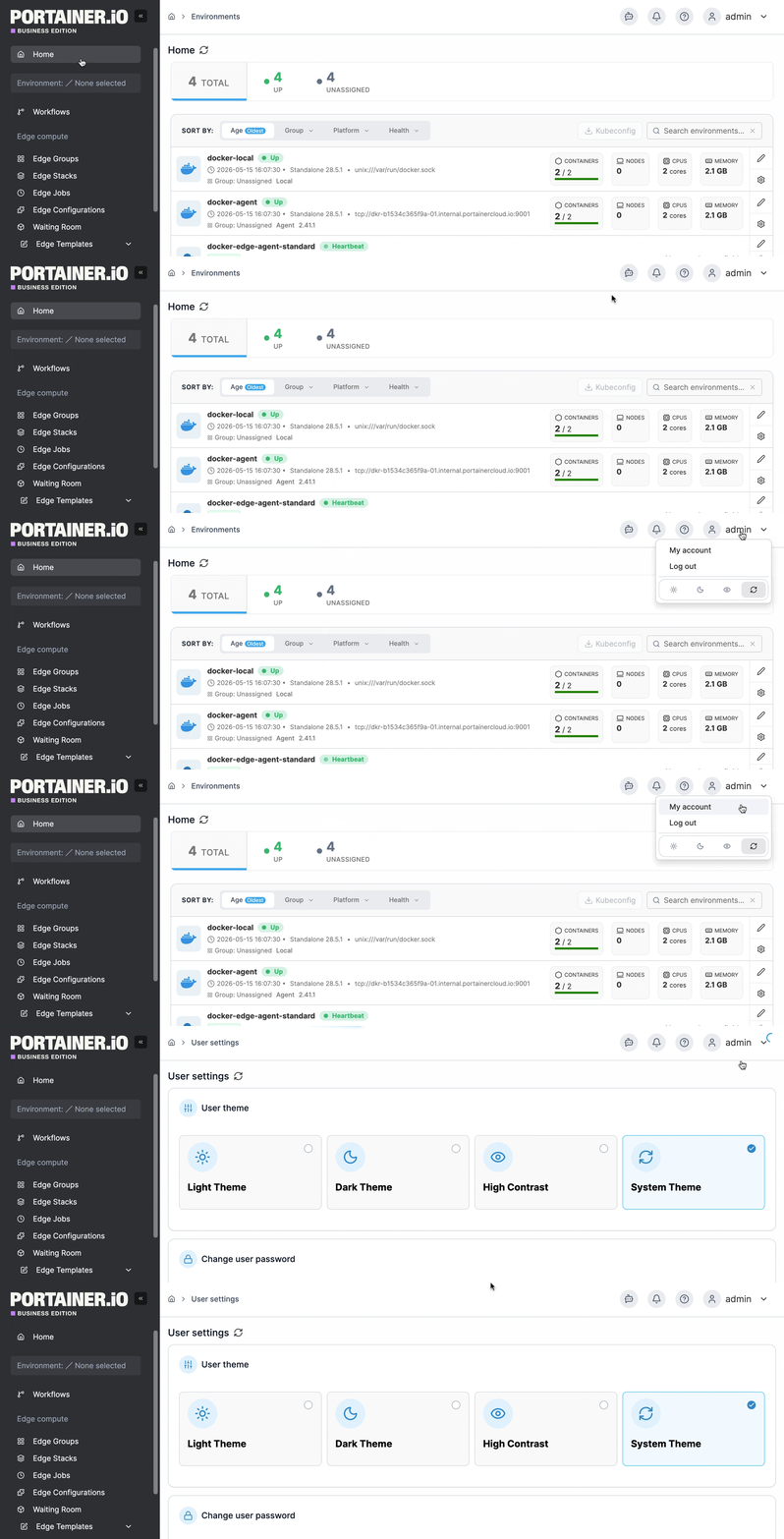
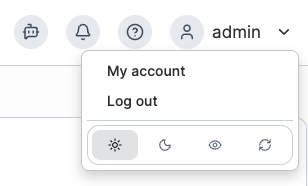
To get access to and update your user settings, click your username in the top-right of the Portainer UI and select **My account**.
## Changing the theme
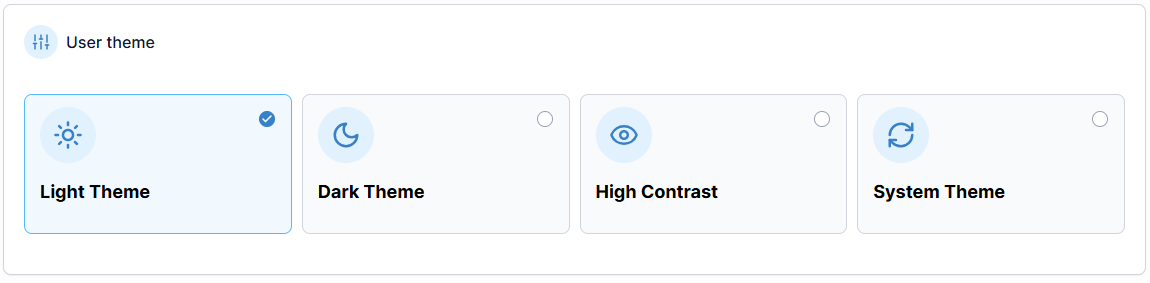
Portainer supports light, dark, and high-contrast themes, with an option to automatically match your system theme. Theme selection applies to your user account only.
You can choose a theme from the username dropdown in the top navigation bar, or from within your account settings. Changes are applied immediately.
## Changing your password
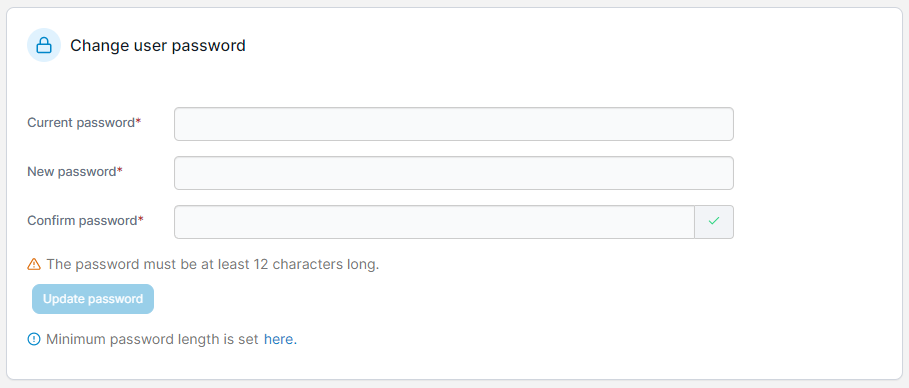
Enter the following details, using the table below as a guide. When you're finished, click **Update password**.
| Field/Option | Overview |
| ---------------- | ----------------------------------------------------------- |
| Current password | Enter the password you currently use to log into Portainer. |
| New password | Enter a new password for your account. |
| Confirm password | Enter the new password again. |
[Minimum password length requirements](/admin/settings/authentication.md) are set by the administrator.
## Application settings
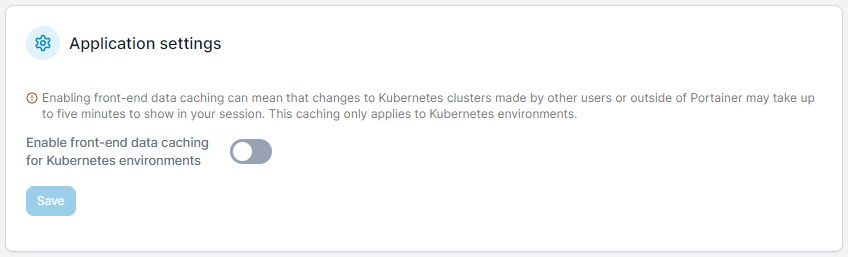
In this section you can enable or disable front-end data caching for your Kubernetes environments. When this this option is enabled, Portainer will cache data provided about your Kubernetes cluster in the front-end in order to improve load times when viewing the cluster. This caching can however mean that you may not see fully up-to-date information, and changes made by other users or outside of Portainer may take up to five minutes to update in your session.
## Access tokens
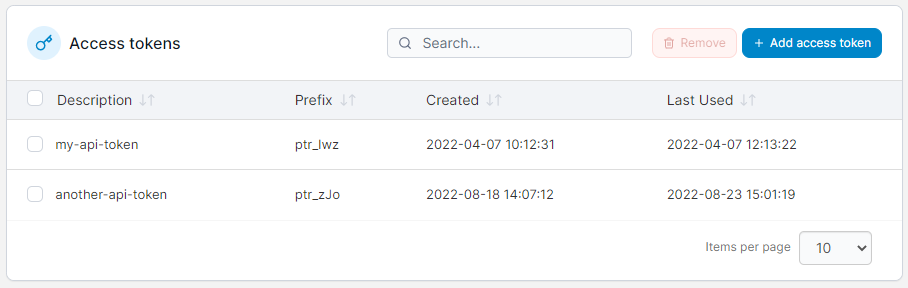
This section allows you to manage your API access tokens. You can see a list of the access tokens that exist for your user as well as add and remove tokens as required.
For more information on access tokens, refer to our [API access documentation](/api/access.md#creating-an-access-token).
## Git credentials
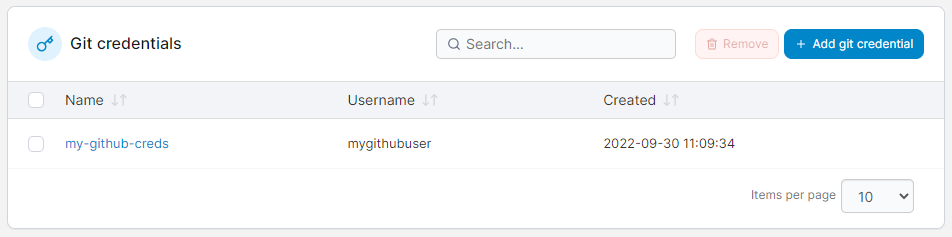
This section lets you manage your saved Git credentials for use in deployments. These credentials are available only to your user.
{% hint style="info" %}
This feature is only available in Portainer Business Edition.
{% endhint %}
{% hint style="info" %}
Adding shared Git credentials can be done from the [Shared credentials](/admin/settings/credentials.md) view.
{% endhint %}
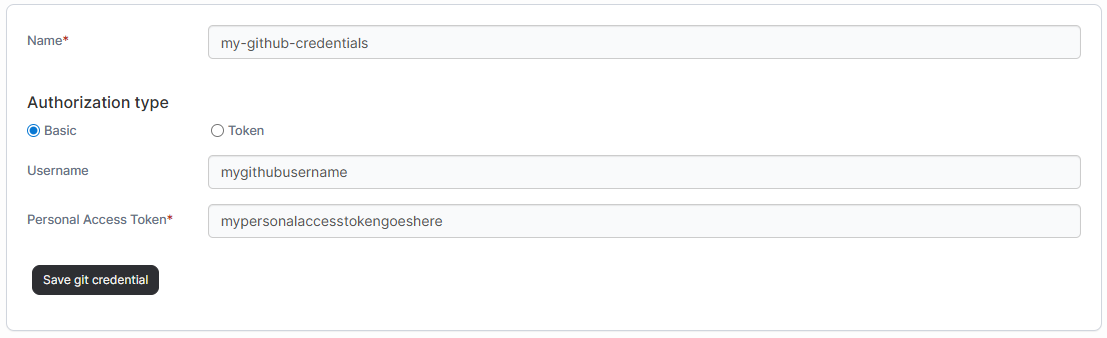
To add a new credential, click the **Add git credential** button and fill out the fields using the table below as a guide:
| Field | Overview |
| --------------------- | ------------------------------------------------------------------------------------------------------------------------------------------------------------------------------------------------------------------------------------------------------ |
| Name | Enter a name for this credential entry. This is how it will appear when selecting it for use when deploying. |
| Authorization type | Select either **Basic** or **Token** authorization depending on what your Git repository requires. For example, GitHub uses Basic authorization and Bitbucket uses Token authorization. |
| Username | Enter the username, if relevant. |
| Personal Access Token |
|
Once you've entered the relevant details, click **Save git credential** to save the entry.
## Helm repositories
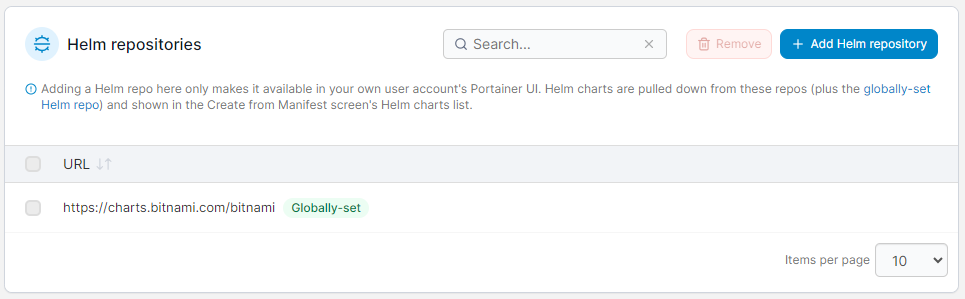
By default, Portainer ships with the [Bitnami Helm chart repository](https://bitnami.com/stacks/helm) already pre-configured. In this section you can add additional Helm repositories to reference when deploying Helm charts.
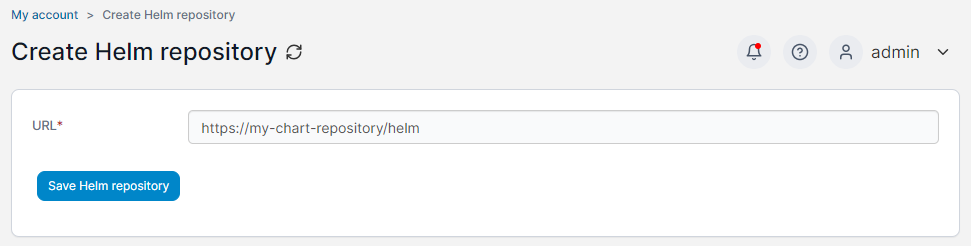
If you would like to add an additional third-party repo, click on **Add Helm repository**, enter the repository URL and click **Save Helm repository**.
{% hint style="info" %}
Repositories added here are only available to your user. You can configure a Helm repository that will be available to all users in [Settings](/admin/settings/general.md#helm-repository).
{% endhint %}