> For the complete documentation index, see [llms.txt](https://docs.portainer.io/llms.txt). Markdown versions of documentation pages are available by appending `.md` to page URLs; this page is available as [Markdown](https://docs.portainer.io/user/docker/images/build.md).
# Build a new image
There are three ways you can build new images.
{% hint style="info" %}
On a multi-node environment, the built image will only be available on the node you select in the **Deployment** section. To make the image available to all nodes, consider [adding a registry](/admin/registries/add.md) to Portainer.
{% endhint %}
{% hint style="warning" %}
When building an image with Portainer, you are unable to use `ADD` or `COPY` commands referencing files on the host. We recommend using `wget` or similar to retrieve files from a HTTP/S URL instead.
{% endhint %}
## Method 1: Using the Portainer web editor
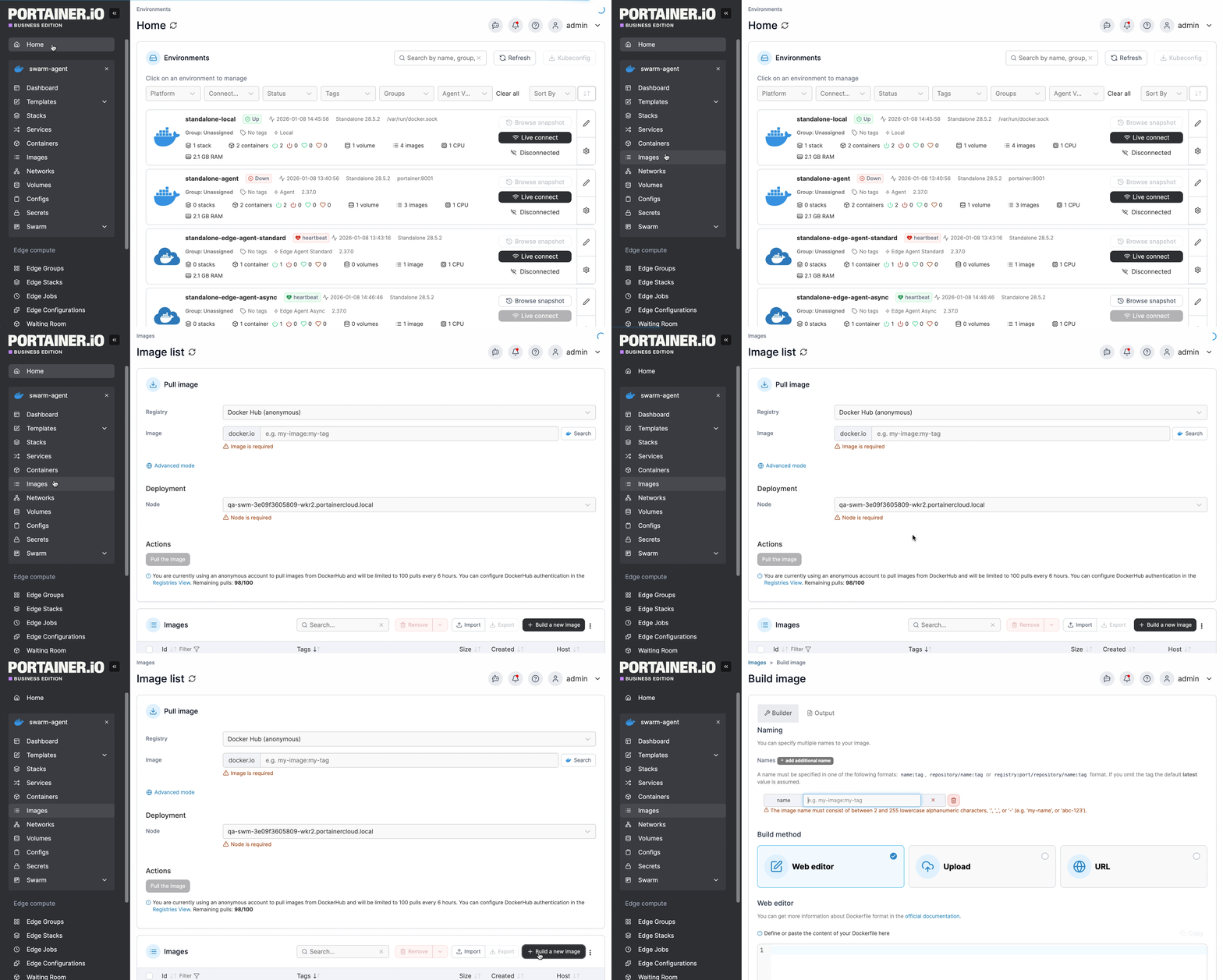
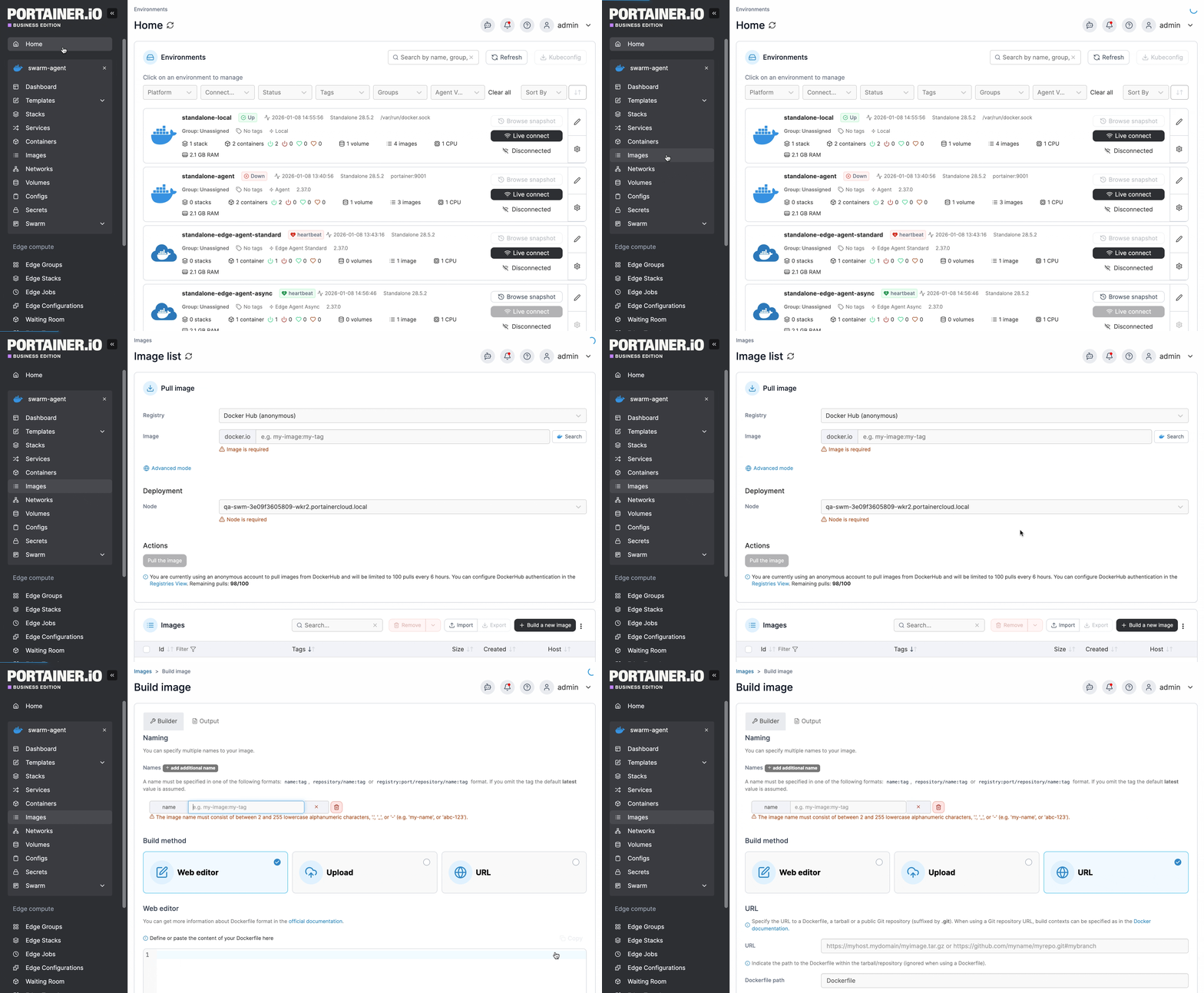
From the menu select **Images** then click **Build a new image**.
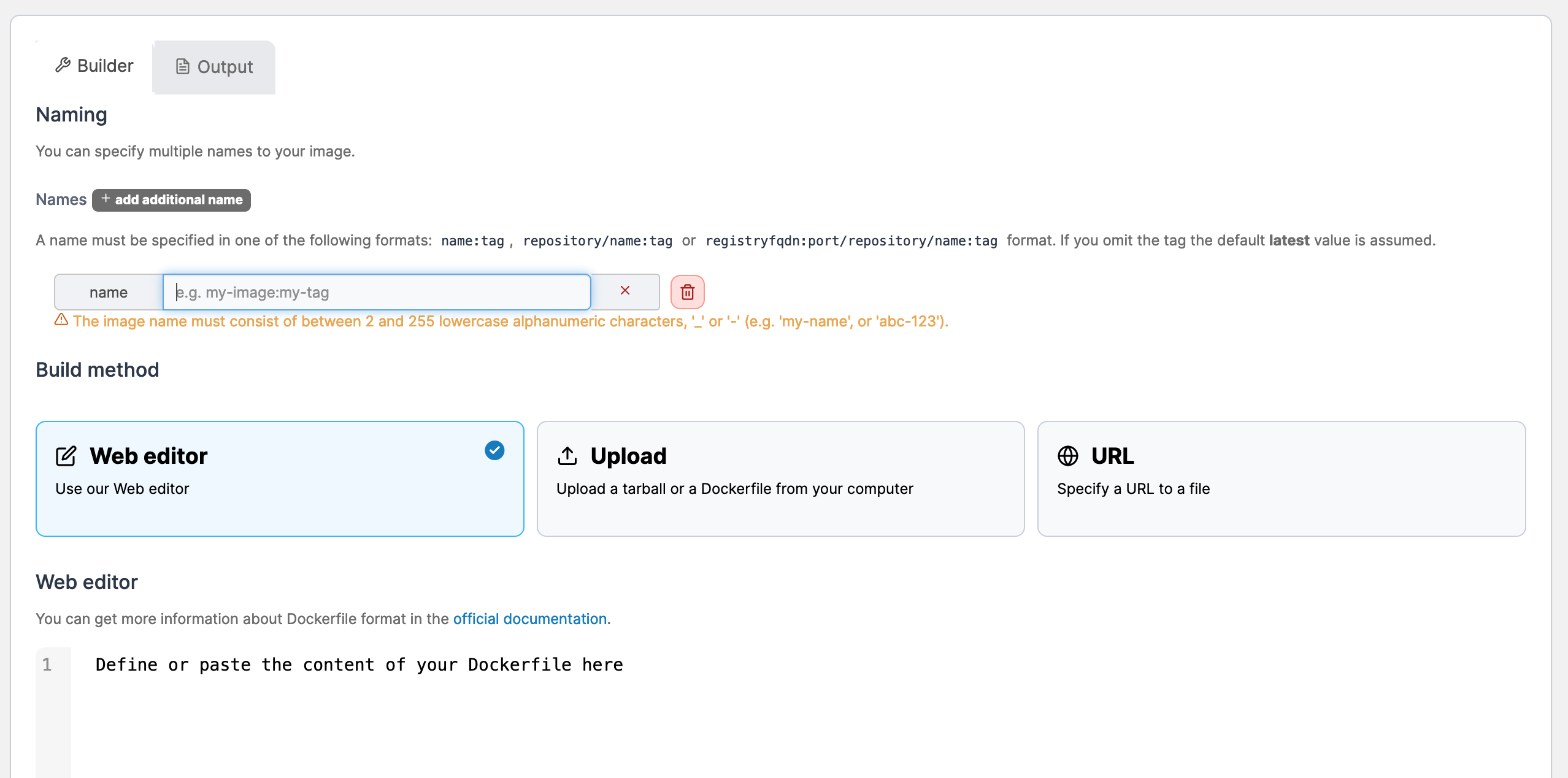
Next, give the image a descriptive name (you can enter multiple names), select the **Web editor** option under **Build method**, then write your Dockerfile in the web editor.
{% hint style="info" %}
You can search within the web editor at any time by pressing `Ctrl-F` (or `Cmd-F` on Mac).
{% endhint %}
Optionally, you can upload one or more local files to be included in an image by clicking **Select files** and selecting the files to include. You can then reference them in your Dockerfile.
Select the node you want to save the image on (if on a multi-node environment) then click **Build the image**.
When the build is finished, select the **Output** tab to view the build history and the result.
## Method 2: Uploading a Dockerfile
If you have an existing Dockerfile, you can upload it to Portainer and use it to build the image.
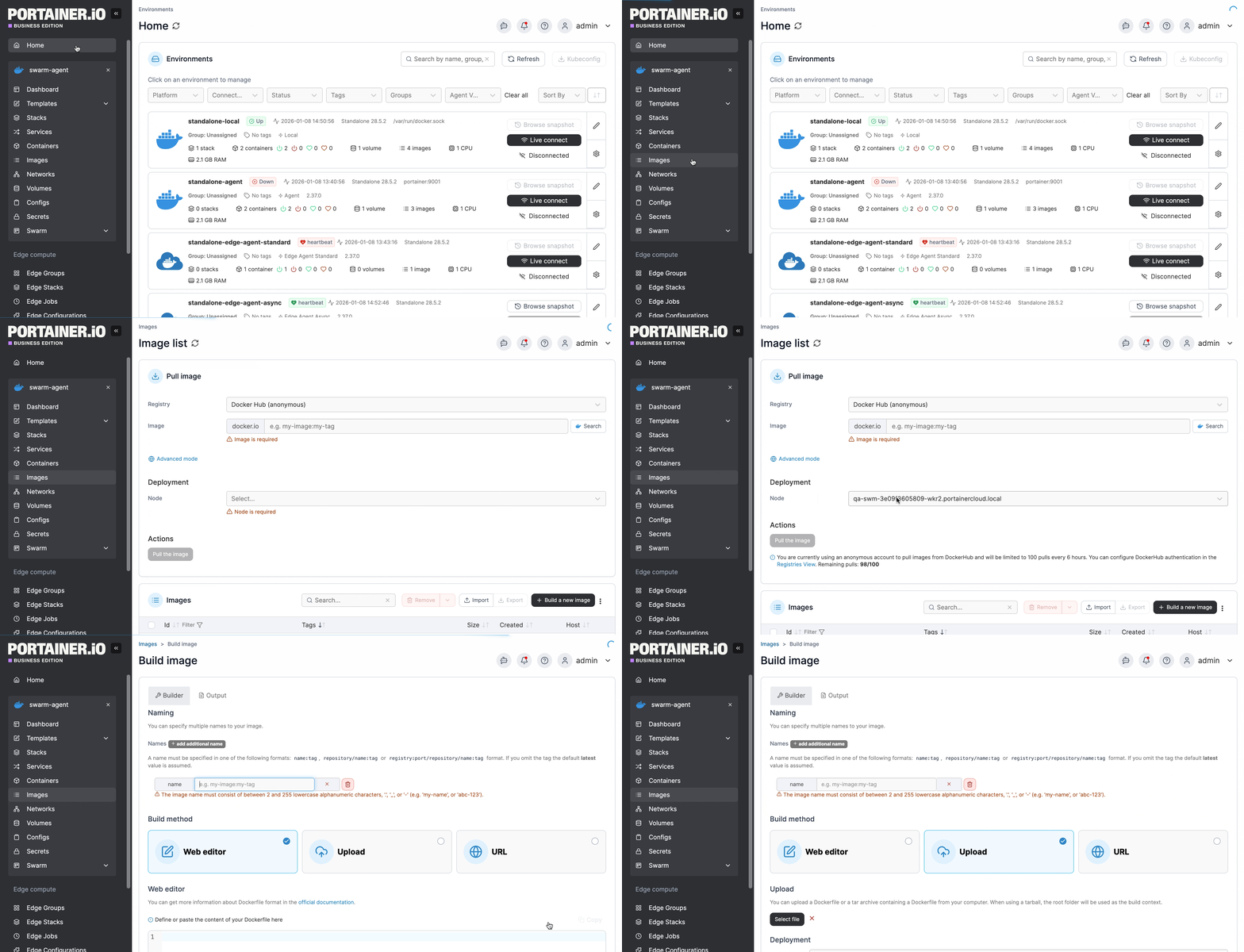
From the menu select **Images** then click **Build a new image**.
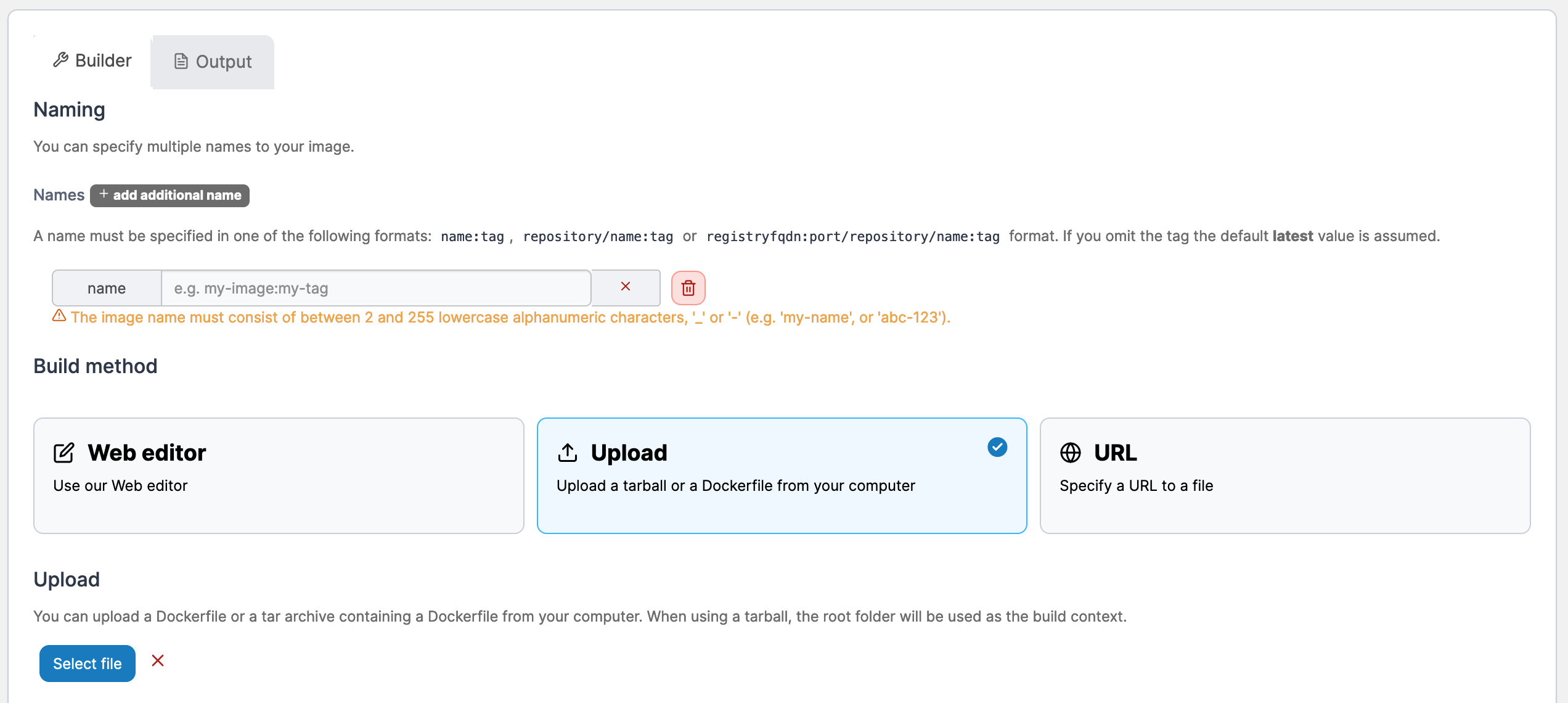
Next, give the image a descriptive name (you can enter multiple names), select the **Upload** option under **Build method**, then browse to and upload the Dockerfile.
Scroll down and select the node you want to save the image on (if on a multi-node environment) then click **Build the image**.
When the build is finished, select the **Output** tab to view the build history and the result.
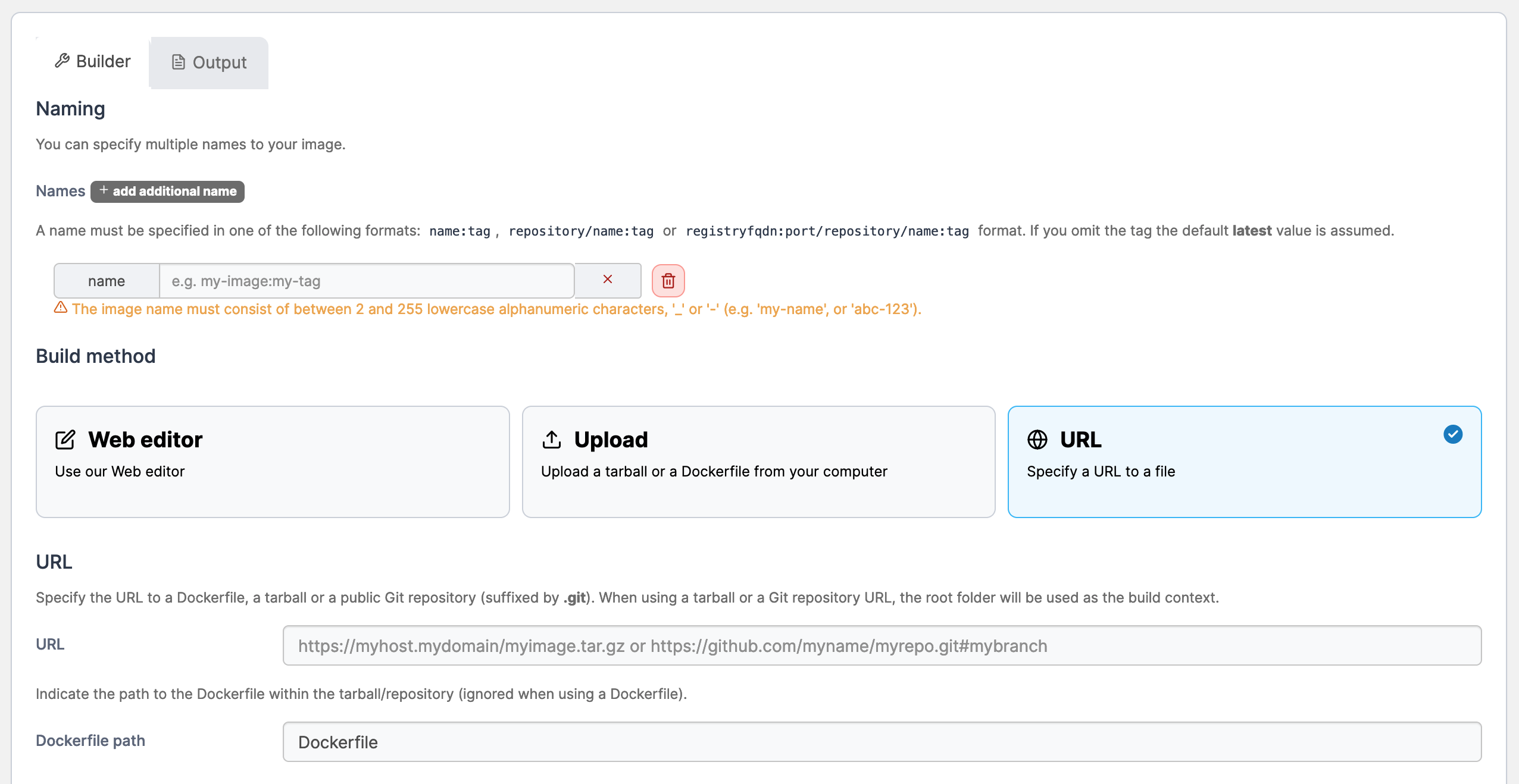
## Method 3: Providing a Dockerfile from a URL
If the Dockerfile is hosted on the Internet (either in a tarball or a public GitHub repository), you can download it directly to Portainer via its URL.
From the menu select **Images** then click **Build a new image**.
Next, give the image a descriptive name (you can enter multiple names), select the **Upload** option under **Build method**, then enter the **URL** of the file and the **Dockerfile path** within the tarball or repository.
Scroll down and select the node you want to save the image on (if on a multi-node environment) click **Build the image**.
When the build is finished, select the **Output** tab to view the build history and the result.